
BLOG 19/2026 DATED 19TH MARCH 2026
Ancient Iran, the land of Persia:
Iran boasts one of the world’s oldest civilisations, with history dating back to tens of thousands of years. The historical roots go back to 3000 BC with early civilisations like Elamites. The first prominent and authentic history of Iran pertains to the Achaemenids Empire dating back to 550 BC to 330 BC. The area was then known as Persia. The empire was established by Cyrus the great who ruled a very large empire, with many conquests in east and west. Cyrus the great is also credited with facilitating the coming back of Jews to Jerusalem. Darius I the great, extended the empire to its peak extending from the parts of India to Greece, arguably the largest ever continuous empires in the world. In 330 BC, the empire fell to Alexander the great. However, it retained its culture and ancient civilization. By 260 BC, nomads called Parni ousted the Greeks and ruled the Persia for around 500 years.
Medieval Iran, the advent of Islam:
The Sasanian empire established in 224 AC and brought back the dominance of the region. Persia became a competitive rival to Roman and Byzantine empires in all the parameters viz military, commerce or culture. Things however changed with the advent of Islam as both Persian and Roman forces were defeated by Islamic forces raised from Arab in the 7th century. The Arab conquest brought one of the most profound transformations in Iranian history. Islam gradually replaced Zoroastrianism, reshaping the region’s religious and cultural landscape. Persian scholars, poets, and administrators became central to the Islamic Golden Age. The Mangol invasion in 13th century devastated everything but its cultural roots.
Dynasties and modernisation:
In 1501, Safavid empire was established by Shah Ismail 1. The dynasty lasted upto 1736 when Persia was transformed from Sunni to Shia Islam as the state religion. In 1736 the rule went into the hands of Qajar dynasty and they could not resist the Russian and British invasions. A major chunk was controlled by these foreign forces. By 1921 Reza Khan and then his successor Reza Khan Pehlavi alienated religious leaders and modernised the area of his control. He first named the country as IRAN in 1935.
Islamic Revolution and modern Iran:
With modernisation, western culture influence also increased. This, mixed with authoritarian rule, created a rift in the society and Iran saw one of the greatest revolutions in the modern history viz Islamic revolution of 1979, led by Ruhollah Khomeini. The Pehlavis were overthrown and Iran came under the control of Shia Islam once again. This time however as a thorn in the eyes of western world, as they enjoyed control over Iranian assets till 1979. Under Ruhullah Khomeini, Iran migrated from a capitalist economy to popular Islamic cultural economy. Industries were nationalised and western influence was banned under the law. US supported the ousted Shah Pehlavi while Khomeini declared US as the “great satan”
Iran – Iraq 8 years long war hit the Iranian economy hard with no side coming out as clear winner. History records that it was Iraq who was aggressor in this war while Iran was a defender. The bone of contention was control of the vast oil assets. It is alleged that Iraq used chemical weapons during the war. Iraq was supported by Egypt, Arab nations as well as US. A UN brokered deal was signed in the year 1988 with Iran successfully protecting its interest. Ruhullah Khomeini died in 1989 and the 25 men constitutional reform council named Ali Khamenei as next supreme leader.
Iran has been internally administered by their elected presidents who are responsible for policy making and governance in the country. The Supreme Leader is a sort of religious head and occasionally has a final say too. Though the supreme leaders both Ruhullah Khomeini and Ali Khamenei had religion on top of the table, Iranian governance remained professional, creating a balance of tradition and modernity.
However, an uneasy equation also continued, and, on many occasions, it surfaced in the forms of uprisings in favour of liberal standards specially on the rights of women. Iranian governance was blamed for subjugating women under strict Islamic laws more specifically Hijab. However, when we see that the literacy rate of women in Iran is around 98%, it seems the claims of women subjugation is due to Iran’s non adoption of western values rather than actual reality on ground.
Apart from this social uneasy equation, Iran also suffered due to sanctions imposed by US for its nuclear program. Iran made their position clear as Khamenei issued a fatwa in 2005, forbidding production and use of nuclear weapons. However, this was not sufficient for US and the sanctions continued. There were attempts by Israel and US to destroy the Iranian nuclear facilities but strictly opposed by Russia and China. This economic embargo alienated Iran from the world trade and badly impacted their currency and domestic economic condition.
In 2013 Hassan Rouhani won the Presidential elections and used diplomacy to bring Iran back to the international arena. In 2015, US, UK, Russia, Franch, EU, China and Germany signed the Joint Comprehensive Plan of action called Iran Nuclear Deal. Iran agreed to restrict its nuclear activities while some sanctions were lifted. In 2018, however, US under Donald Trump pulled out of the deal and imposed several economic sanctions on Iran.
Iran is also criticized for supporting several militant outfits in Arab world and around viz Houthis, Hamas and Hezbollah. Iran supported these organisations to counter US-Israel-Arab nations group who were hostile against Iran. Iran also directly and indirectly engaged with Israel on the issue of Palestine that has resulted into 12 days war between US-Israel Vs Iran in 2025.
January 2026 saw a formidable uprising in Iran against the present rule; however, it was crushed with force, and Government took control of the things in a very short time. Iran alleges that the protesters were Israel Agents or supported by Israel while US-Israel pushed for a regime change through the uprising.
28th Feb 2026 saw an unprovoked attack by US-Israel while the negotiations between US and Iran were going on. The first wave of attack killed Ali Khomeini, the supreme leader of Iran. This led to the beginning of a full-fledged war that is in its 20th day at the time of writing this blog, and continues to kill innocents, destroy assets worth billions and put the world on an economic and security emergency.
Some facts on Iran:
Present Supreme Leader: Mojtaba Khamenei
President : Masoud Pezeshkian
| Location | West Asia |
| Area | 1.64 mn sq km |
| Population | 89 million (approx.) |
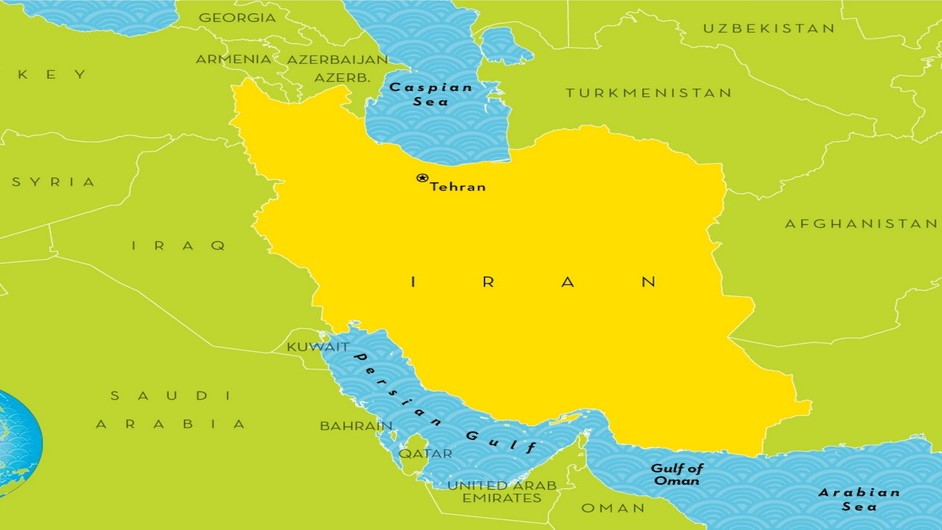
| Sea | Percian Gulf, Caspian Sea |
| Economy | World’s second largest natural gas reserve. Top Oil Producer in OPEC Inflation around 40% Currency – Rial – 1USD = 1315000 rial Per Capital Income – USD 4800 approx. per anumm. Economy resilient despite severe sanctions. |
| Status of Women | Youth female literacy – 98% Overall female literacy – 89% University participation – 60% |
| Science | Ranking 4th globally in nanotechnology. Ranks among top 15 nations in scientific output. Advanced research on cardiac tissue engineering. Development of tumor on a chip for testing anti-cancer drugs. Domestically designing and launching satellites. Strong global ranking in AI research. Development of indigenous nuclear technology. |
Iranian Scientists in Ancient & medieval Period:
| Name | Contribution | Period |
| Muhammad Ibn Musa Al Khwarizmi – | Father of Algebra and Algorithm | 780-850 AC |
| Zakaria Razi | Distinguished smallpox from measles, inventor of net weight of matter. | 865 – 925 AC |
| Abu Ryhan Al Baruni | Calculated earth radius, wrote astronomical encyclopedia, gave possibility that earth may revolve around the sun. | 973- 1048 AC |
| Ibn Sina | Wrote ‘The Cannon of Medicine’ gave germ theory | 980-1037 AC |
| Omar Khayyam | Cubic equations, refined solar calendar | 1048 -1131 AC |
| Nasir Al Din Al Tusi | Creator of Trigonometry as distinct discipline | 1201-1274 AC |
| Jamshid Al Kashi | Calculated pai and decimal solutions | 1380 – 1429 AC |
SUBSCRIBE AND SHARE
Discover more from At Silly Point
Subscribe to get the latest posts sent to your email.