
BLOG 13/2026 DATED 19TH FEB 2026
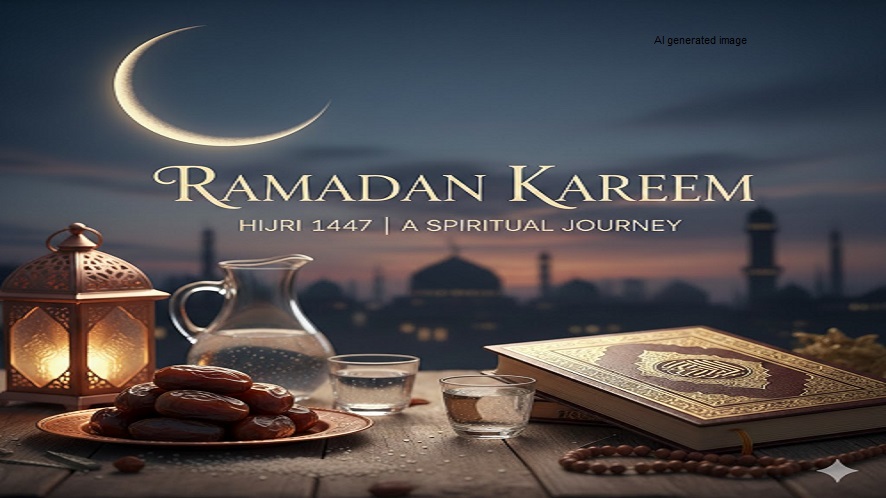
Here comes the month of Ramzan (Ramadan), Hijri 1447, the blessed month when Muslims all over the world observe Roza for the entire day from dawn to dusk for the full month. It is a beautiful and transformative time of the year. Ramadan truly shifts the rhythm of the believers, turning the focus inward toward discipline, gratitude and self-realisation.
This is the 9th month of the Hijri Calendar. In hijri calendar system, every month begins with the sighting of moon. As soon as the moon for Ramadan is sighted, Eligible Muslims all over the world change their routine and follow a set Ramadan timeline. The month ends with sighting of moon for the next month, Shawwal and the first day is celebrated as Eid, a celebration for successful completion of the month of Ramadan. While it is made mandatory to observe roza for all 29/30 days of the month, it is prohibited to fast on the 1st day of Shawwal, i.e the day of Eid ul Fitr.
History of Ramadan:
Fasting is observed by almost every community in one form or the other with different objectives. It was revealed to Prophet Muhammad (pbuh) in 624 CE, the 2nd year of Hijri calendar to observe roza for the entire month of Ramadan. It is stated in Qura’n
“O you who have believed, decreed upon you is fasting as it was decreed upon those before you that you may become righteous”
Qura’n 2:183- (translation by Sahih International)
Ramadan is observed as a result of the above commandment from Qur’an. It is also clarified that fasting has been decreed for earlier communities as well and it is not a fresh practice.
Relevance of the month:
- The month of Ramadan is associated with the revelation of Qura’n.
- As fasting is decreed upon all communities, Ramadan fasting is obligatory for Muslims.
- The purpose of fasting in Ramadan is to achieve righteousness.
- It is one of 5 pillars of Islam along with Kalima (pronouncement of belief), Salah, Zakat and Haj.
- The act of fasting begins with ‘Sehri’ i.e a meal before the dawn.
- With the conclusion of sehri all food items including water or any liquid/solid becomes prohibited till the setting of sun.
- Fasting is only a part of roza as one is also expected to abstain from any sexual act, any act of anger or using abusive or substandard language, speaking lies, backbiting or any other prohibited act during the entire day. All this is important for completing the roza successfully.
- The roza is broken in the evening with ‘Iftar’, a meal taken at the time of breaking the fast.
- From Iftar to sehri the restrictions of fasting are lifted.
- However, it is strongly recommended to spend the night in the worship of almighty God and not waste time in other activities.
- Increase night worship during the last ten days, and aim to spend the odd-numbered nights entirely in devotion
- As the month is associated with the revelation of Qura’n, people are expected to read Qura’n during the month with all sincerity.
- Increase charity and help others.
- All adults and healthy people are to observe these days as a command from Qura’n except those who are sick or travelling or very old or incapable to fast.
Things to avoid:
Fasting is a holistic discipline, not just a digestive one. It’s about “starving” the ego and the lower self, not just the stomach.
When the sun goes down, it can be very tempting to treat the night like a “reward” for the day’s struggle, but that often leads to habits that eats up the spiritual benefits of the month.
To ensure the effort isn’t “wasted,” it helps to focus on these two specific areas:
- Physical Moderation (The Stomach)
- Overeating at Iftar or throughout the night leads to lethargy, which makes it harder to focus on the night prayers (Tarawih) and the pre-dawn meal (Sahri). Eat enough to gain strength, but not so much that you feel heavy.
- Moral Discipline (The Tongue and Eyes)- The fast of the Heart.
- The Tongue: Avoiding backbiting, lying, or arguing. How to achieve this?
- Keep silence as far as possible.
- Change the topic if such talks are going around
- Leave the place politely.
- If there is an urge to criticize, make dua for that person to whom you want to criticize.
- The Eyes: Avoiding “vague activities”—this could mean endless scrolling on social media, watching mindless content, or anything that distracts the mind from reflection and remembrance of the almighty God. How to achieve this?
- Read more instead of watching.
- If it is necessary to watch, review after 15 minutes, is the content still useful.
Not avoiding these vices and remaining hungry and thirsty the entire day make it an empty fast rather than a spiritual fast. Here is the comparison.
The Empty Fast vs. The Spiritual Fast
| Action | The Empty Fast | The Spiritual Fast |
| Nights | Overeating, social media watch | Prayer, reading, and rest for worship. |
| Speech | Gossiping, anger, backbiting. | Kind words, silence, positive. |
| Approach | Counting hours, seeking excuses, expressing thirst, hunger. | Seeking self-improvement and righteousness. Thanking almighty for this month. |
Conclusion:
The gifts of this blessed month can be summarized and concluded as under:
The Gift of Righteousness: Using the month as a “training ground” for the rest of the year and master over our ego.
The Power of Empathy: Bridging the gap between the privileged and the needy through shared experience.
The Strength of Discipline: Proving to ourselves that we are masters over our desires, not slaves to them.
Universal Goodwill: Extending these blessings to all of humanity, seeking peace and truth for everyone.
Let us live every bit of these coming days, I pray for you all and you pray for me.
Happy Ramadan.

Discover more from At Silly Point
Subscribe to get the latest posts sent to your email.