
BLOG 35/2026 DATED 26TH MAY 2026
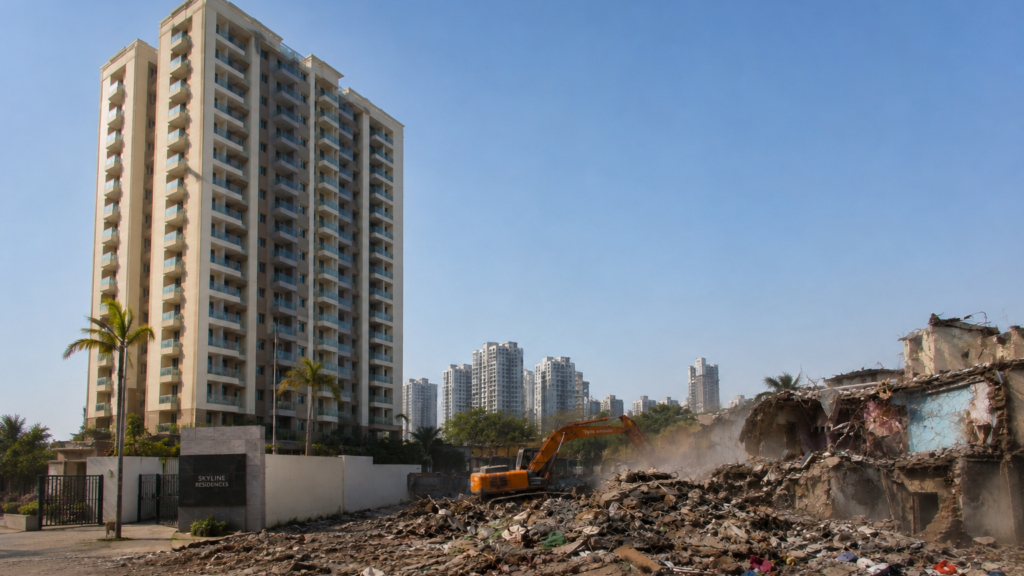
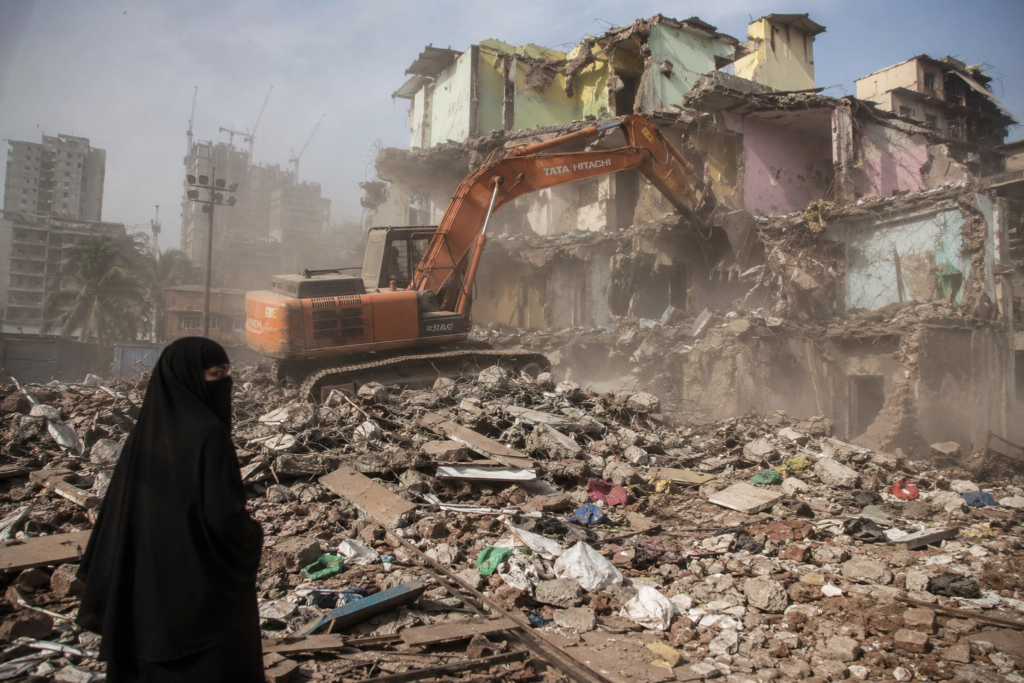
The recent demolition of around 400 houses at Gharib Nagar, a Mumbai slum, has exposed one of the deepest developmental contradictions: Can a nation modernise by uprooting the very people who helped build its cities?
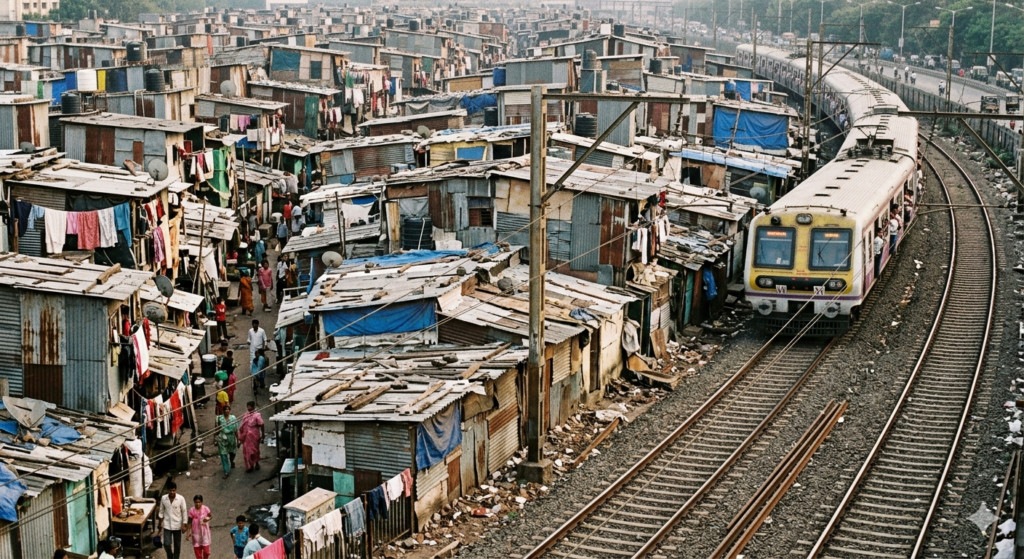
The demolition was legally justified. The settlement had allegedly encroached upon Railway land for decades, and the Railways reportedly fought a long legal battle before obtaining court orders in its favour. Tin sheds and huts had come dangerously close to railway tracks, raising concerns over safety, sanitation, and illegal occupation of public land. The administration argued that clearing the land was necessary for infrastructure expansion and urban development.
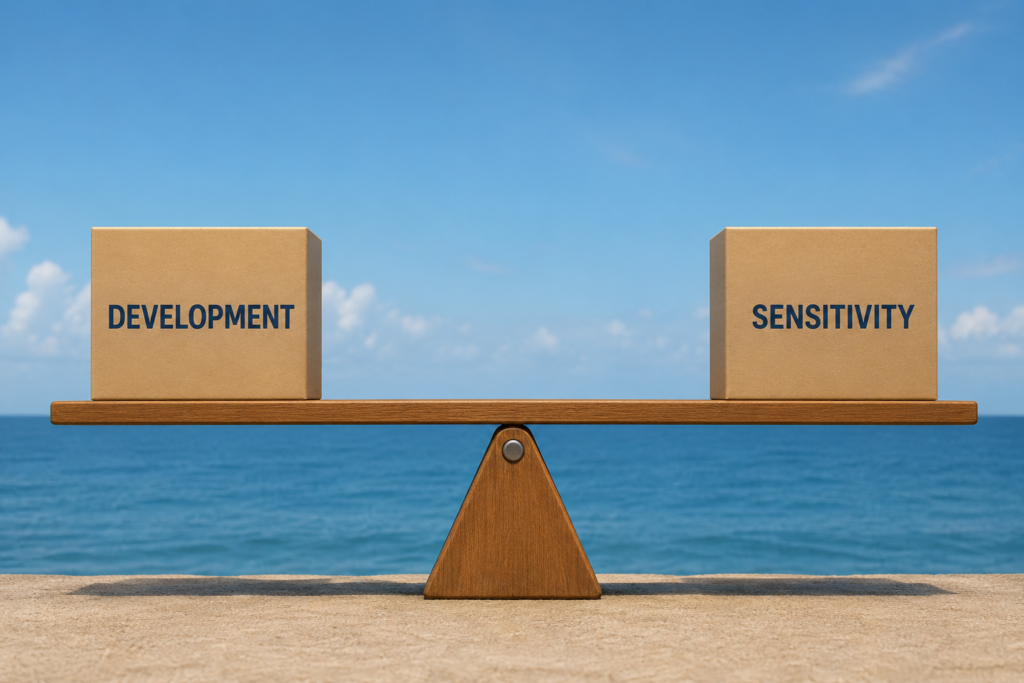
Yet the images of bulldozers flattening homes where families had lived for generations raise difficult questions. If a locality survives for nearly 200 years, can the State suddenly treat it as merely an “encroachment”? If people lose not just homes but access to livelihood, schools, social networks, and economic survival, does legal correctness automatically become social justice? The Gharib Nagar episode is not merely about one slum. It is a debate about the future of urban India — a debate between development and sensitivity
Why demolitions become necessary
From an economic and administrative perspective, governments often see unauthorised settlements as obstacles to planned urban growth.
Indian cities suffer from severe infrastructure deficits. Railway corridors, metro lines, highways, drainage systems, and urban transport projects often get delayed because land is occupied by informal settlements. In densely populated cities like Mumbai, every acre of land carries enormous economic value.
Supporters of the demolition present several arguments.
1. Public Land Cannot Be Permanently Encroached Upon
Railway land belongs to the public. If encroachments are tolerated indefinitely, governments lose the ability to expand essential infrastructure. Modern cities cannot function efficiently when critical land parcels remain inaccessible.
Infrastructure projects generate long-term economic gains — faster mobility, higher productivity, lower logistics costs, and increased investment. Economists often argue that these gains benefit millions, while the immediate pain is suffered by a smaller group.
2. Safety Concerns Are Real
Settlements near railway tracks are dangerous. Fires, accidents, electrocution, and train-related fatalities are common in such areas. Authorities therefore argue that removing these settlements is necessary not only for development but also for public safety.
3. Slums Create Urban Externalities
Unplanned settlements strain sanitation systems, drainage, water supply, and waste management. They can worsen flooding and create health hazards. From a city planning perspective, governments believe formal redevelopment creates cleaner and more efficient urban spaces.
4. Legal Orders Must Be Enforced
If courts issue eviction orders and governments fail to act, the credibility of law itself weakens. Administrations therefore claim they are merely implementing judicial directives rather than acting arbitrarily.
These arguments are economically and legally persuasive. But is this the entire story?
The Human Cost Hidden Behind “Development”
Development statistics often fail to capture what informal settlements actually represent. For policymakers, a slum may appear as an illegal cluster of structures. But for residents, it is an economic ecosystem.
A large proportion of slum residents work as daily wage labourers, domestic workers, drivers, street vendors, mechanics, security guards, and small service providers. Their proximity to affluent neighbourhoods or commercial zones is not accidental — it is economically necessary.
When such settlements are demolished suddenly, the losses extend far beyond housing.
1. Livelihood Disruption
Most daily wage workers survive because they live close to employment hubs. Relocation to distant rehabilitation colonies can increase transport costs and commuting time to unsustainable levels.
A worker earning ₹500 a day cannot afford to spend ₹150 daily on transport. As a result, many eventually lose employment.
2. Informal Economies Collapse
Slums support thousands of micro-economies — tea stalls, tailoring units, scrap dealers, repair shops, vegetable vendors, and home-based businesses. Demolitions destroy these invisible economic networks overnight.
3. Intergenerational Damage
Children lose access to schools. Women lose neighbourhood support systems. Elderly residents lose social security created through community ties. Such displacement creates long-term social instability. It can also give birth to ‘natural angry young men’ of future who may not treat the system as their friend but their enemy as it was the system who demolished their dreams.
4. Psychological and Financial Insecurity
A demolished house is not merely a physical loss. For poor families, even a small informal dwelling often represents decades of savings and labour. In economic terms, demolitions can push vulnerable households deeper into poverty traps.
Amartya Sen’s Capacity Approach and the Real Meaning of Development
The debate becomes more meaningful when viewed through the lens of Amartya Sen, Nobel Leurate, and his famous “Capability Approach.”
Sen argued that development should not be measured merely through GDP growth, infrastructure, or physical assets. Real development means expanding people’s capabilities — their ability to live lives they value. According to this framework, a person is not truly “developed” merely because a city becomes cleaner or richer. Development occurs when individuals gain meaningful opportunities such as access to education, healthcare, dignity, employment etc.
Under this approach, bulldozing settlements without rehabilitation may improve urban appearance but reduce human capabilities, the State may actually be reducing developmental freedom, even while constructing better infrastructure. Sen’s philosophy therefore forces policymakers to ask a difficult question:
Can development that destroys human capability truly be called development?
Is Rehabilitation Necessary Before Demolition?
This is perhaps the central moral and policy question. Should the Government go ahead with the demolition of slums or regularise/rehabilitate them. This contradiction creates what economists call a “spatial inequality trap” — where workers are economically necessary but geographically unwanted.
Legally, authorities may not always be required to provide rehabilitation to every encroacher. But economically and ethically, rehabilitation often becomes essential. A democratic State cannot ignore the reality that many such settlements exist because formal housing remains unaffordable for low-income populations. In cities like Mumbai, even tiny legal housing units are beyond the reach of daily wage workers. Informal settlements therefore emerge not merely from illegality but from structural housing failure.
Providing rehabilitation before demolition offers several advantages:
- It reduces humanitarian distress.
- It preserves labour force participation.
- It prevents migration shocks.
- It lowers long-term crime and instability risks.
- It maintains social legitimacy of development projects.
However, rehabilitation policies themselves are complicated. Fraudulent claims, political patronage, and fake occupancy records often distort rehabilitation schemes.
Still, the absence of policy perfection cannot justify absence of compassion.
A Balanced Policy India Needs
India requires a middle path — one that protects public land without dehumanising the poor. A sensible policy framework could include:
1. Time-Bound Rehabilitation First
Where settlements are decades old, rehabilitation should ideally precede demolition. Temporary transit housing can reduce immediate distress.
2. Livelihood-Centric Relocation
Rehabilitation should not push workers 40–50 kilometres away from workplaces. Housing must be linked to employment geography.
3. Rental Housing for Urban Poor
India focuses excessively on ownership housing. Affordable rental housing near economic zones can reduce future slum formation.
4. Strict Cut-Off Dates
Governments may announce that settlements existing before a certain date qualify for rehabilitation, while future encroachments face strict removal. This balances compassion with deterrence.
5. Community Participation
Residents should be included in redevelopment planning rather than treated as obstacles. Participatory urban planning often produces more sustainable outcomes.
6. Slum Upgradation Wherever Possible
Not every settlement needs demolition. In some cases, sanitation, drainage, and structural improvement may be more cost-effective than displacement.
Conclusion: Development Needs sensitivity, Not Just Bulldozers
The Gharib Nagar demolition represents the larger story of India’s urban transition. India undoubtedly needs infrastructure, cleaner cities, safer railway corridors, and planned urban expansion. Encroachments on critical public land cannot continue indefinitely. But development that ignores human suffering risks becoming economically short-sighted and morally hollow.
The poor are not enemies of development. In many ways, they are its invisible foundation. They build roads, clean offices, deliver goods, cook meals, and sustain urban life.
The challenge before India is therefore not choosing between development and sensitivity. The real challenge is achieving development with sensitivity.
A mature nation is not judged merely by the height of its skyscrapers or speed of its trains, but by how it treats its most vulnerable citizens while pursuing progress.
FREQUENTLY ASKED QUESTIONS
About the author: The author of the Blog, Sayed Azhar Hasan, is a CFA (ICFAI), MBA, PGDIBF (Islamic Banking and Finance), ex banker with 29 years of banking experience and a management educator with banking and Management Institutes.
On social media:
LinkedIn : Sayed Azhar Hasan | LinkedIn
You Tube: Sayed Azhar Hasan – YouTube
Disclaimer: This blog is for informational and educational purposes only.
Discover more from At Silly Point
Subscribe to get the latest posts sent to your email.