
BLOG 37/2025 DATED 20TH DECEMBER 2025
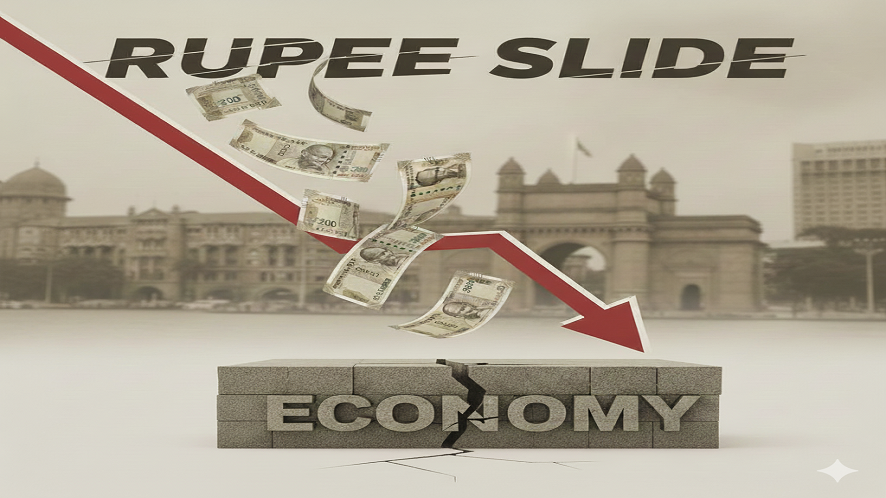
The Indian Rupee is falling and falling like a pack of cards. Specially during 2025 we have observed a devaluation type depreciation in the value of INR against USD. It gives a general notion that something is getting out of our control. However, falling currency is not a devil as it brings a few benefits as well. There are occasions when countries deliberately devalue their currency to avail such benefits. We will briefly discuss the pros and cons of a falling currency and then we will also see the difference between a devaluation of currency and general depreciation of currency as is it happening now in the sense of INR vs USD.
Benefits:
Exporters get the benefit of falling currency. Let us understand in the simple terms. An Indian exporter is exporting a medicine at a cost of 10 USD per pack and the rate is Rs. 90 per USD. On exports he will receive 10 USD and when he converts it in India, he will get Rs.90. If the rupee becomes week and depreciates to Rs. 92, the exporter will receive Rs. 92 for the same export. Therefore, a falling Rupee will generally benefit our exports.
Trade Deficits will potentially come down because trade deficit happens due to lesser exports. If exporters are able to export more quantities due to cheep currency as explained above, then it may also help in reducing trade deficit.
Travellers coming to India will have to spend fewer dollars that may increase the forex income of the country.
NRIs saving dollars for repatriation to India will be benefitted as their families back home can get more in terms of INR.
Drawbacks:
Importers will be hit as they will have to pay more in terms of Rupee for their imports. For example if a computer is costing 10,000 USD in International market and an Indian importer want to purchase it, the importer has to pay more in terms of INR to get 10,000 USD. This will hurt the business of importer and can result in losses and consequential slow down.
Inflation may go up as increased cost of import will be passed on to the customers. A high inflation comes with its own risks and troubles.
Travellers going out of India will have to pay more for their visits as they will have to purchase USD at a high price.
Education abroad will become costlier as more money will be required to buy dollars.
The above are a few examples of benefits as well as disadvantages of falling currency. There are times when Governments intentionally devalue the currency. We have seen such devaluation of Indian Currency in the year 1949,1966 and 1991 when rupee was devalued. The devaluations of currency are as under:
| Period | Pre devaluation value of INR | Post devaluation value of INR | % Devaluation |
| 1949 | 3.30 per USD | 4.76 per USD | 44% |
| 1966 | 4.76 | 7.50 | 57% |
| 1991 | 17.50 | 22.74 | 18% |
In 1949 and in 1966 the rates were fixed while in 1991 INR was a floating currency means that the rates were market driven and use to vary during the day. Now let us understand what happens in a devaluation of currency and when the currency depreciates on its own.
| Parameter | Devaluation | Depreciation |
| Method | Official announcement by Govt/Central Bank | Due to market forces like inflation, export import, interest rates etc. |
| Planning | Well controlled and planned by the Government and managed well | Uncontrolled and unplanned. |
| Purpose | It is done deliberately to set right the balance of payment position, boost exports etc | It is not done with a purpose as it happens as per market movements often reflecting economies health. |
| Change | Change happens in a particular day announced in advance | Change happens gradually without notice. |
| Reason | Due to known problems in the economic system | May happen due to market trading as well as problems in the economic system. |
| Effect | Same pros and cons but as it is controlled it can ripe the benefits in a better way | Same pros and cons but central bank should take immediate steps to manage it so that benefits overcome the drawbacks. |
Conclusion:
If the condition of the economy is not good it is better to devalue the currency and take corrective steps rather than allowing depreciation. As the major parameters such as inflation and GDP are well under control in India the reason may not be the weakness of economy, still the RBI and Government are in a better position to gauge the situation and set right the loopholes in international trade domain. A strong currency is always better than a week currency.
Your views are welcome in comments section to add value to the subject
Subscribe & Share
Discover more from At Silly Point
Subscribe to get the latest posts sent to your email.