
BLOG 36/2025 DATED 16TH DECEMBER 2025
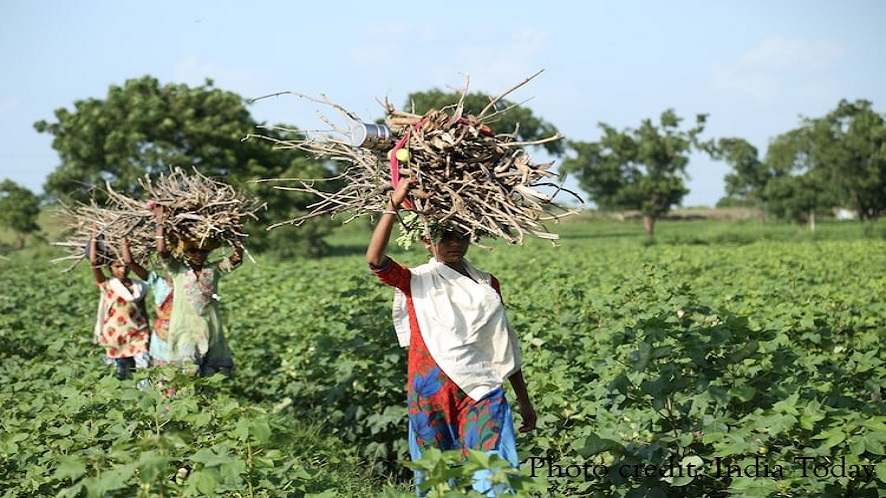
India has been a land of rural masses. Since independence various efforts were made to uplift the status of rural unemployed youth. Successive governments, initiated schemes for rural employment support aimed at the well-being of rural unemployed. Then came year 2005, the then Prime Minister Manmohan Singh, the grand economist who changed the destiny of the nation in 1991 when he was a finance minister by clearing a path of globalization, liberalization, market economy and some also called a capitalist structure, now turned his focus on social welfare and launched a rural employment guarantee scheme through an act of parliament named as MAHATMA GANDHI NATIONAL RURAL EMPLOYMENT GUARANTEE ACT, popularly known as MNREGA. The act made it mandatory to guarantee rural employment on demand. Since 2006 till date the scheme has performed considerably well in helping rural poor. The scheme practically implemented the concept of ‘right to work’. Main features of the scheme were as under:
- A 100 days unskilled manual labour work guaranteed for rural unemployed (one in a family) on demand, every year.
- Any rural household can apply without any poverty line, caste etc.
- There is no reservation for any category except that at least 50% of the work shall be provided to Women.
- Wages are paid directly in bank/post office accounts.
- Work to be provided within 5 Km of the applicant’s residence.
- The employment must be provided within 15 days of the application, if not an unemployment allowance to be paid.
- Works are related to rural economy such as irrigation, water conservation, land development, road construction etc.
- The schemes also provide for social audit from time to time to gauge the effectiveness of the scheme.
The scheme was implemented in 2006 and continued till now when the Government decided to change the name of the scheme as VIKSIT BHARAT- GUARANTEE FOR ROZGAR AND AJEEVIKA MISSION (GRAMIN) BILL. VB- G RAM G BILL along with certain provisions. The new bill has provided for sharing of expenses at 60:40 between center and state governments. It also provides for guaranteed employment of 125 days as against the 100 days at present.
How World Bank reacts to MNREGA:
World Bank has stated in 2009 that MNREGA is a barrier to economic development. This was the time when the scheme was implemented for 3 years and implementation was gradual to become pan India. The idea of guaranteeing rural employment was not received very well. However, by 2014 when the scheme started showing its results the same world bank reacted to the scheme as “stellar example of rural development.” It says “India’s Mahatma Gandhi National Rural Employment Guarantee Act illustrates how Good governance and social mobilization go hand-in-hand,”
Criticism:
The scheme has also faced various criticism specially in beginning. There was political uproar for spending taxpayer’s money. There were also instances of late payments and inadequate allocation of funds. States have also criticised for uneven implementation in different states etc. It is also said that the scheme does not create a permanent employment avenue.
Conclusion:
Some of the critics may actually be correct as implementation of such scheme in the entire country will be a difficult task for any Government. Still, it has played a decisive role in bringing down rural poverty, generating employment and engaging the rural unemployed in the productive activities apart from creating rural assets that directly and indirectly contribute to the development of the country. The Policy is Bottom to Top approach of development and fit for a country like India where sheer number of People can be strength as well as weakness.
SUBSCRIBE & SHARE
Discover more from At Silly Point
Subscribe to get the latest posts sent to your email.