
BLOG 61/2026 DATED 1st November 2026
Atsillypoint is an independent educational and knowledge-sharing platform. It is not affiliated with, associated with, or endorsed by the Reserve Bank of India (RBI), nor does it have any official mandate or authorization from the RBI.
The Reserve Bank of India issued several circulars during October 2026. Of these, we have covered some of the major circulars relating to policy rates, credit valuation adjustments, capital adequacy, and gold loans. The following is only a brief summary of a few selected circulars, along with the author’s observations. For a detailed study of each circular, the relevant link to the RBI website has been provided.
Policy Rates:
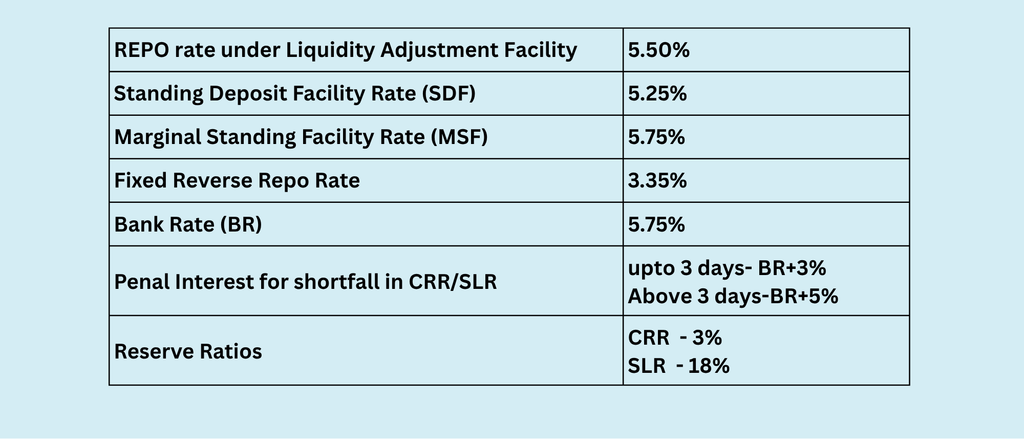
Reserve Bank of India revised the Repo rate upwards in the Monetary Policy Committee concluded on 7th Oct 2026 by 25 bps i.e from 5.25% to 5.50%.
Notifications | Official Website of Reserve Bank of India
Daily Minimum cash maintenance requirement:
The minimum daily Cash Reserve Ratio (CRR) maintenance requirement has been increased from 90% to 99%, with effect from the fortnight beginning 16 October 2026.
Notifications | Official Website of Reserve Bank of India
Credit Valuation adjustment:
What is Credit Valuation Adjustment (CVA)?
CVA is adjustment to default risk-free price of a derivative or Security Financing Transaction (SFT) due to a potential default of the counterparty. It is an adjustment to the valuation of a derivative transaction or SFT to account for the credit risk of contracting parties.
How regulatory CVA differs from accounting CVA?
Regulatory CVA differs from accounting CVA on 2 grounds-
1. Regulatory CVA excludes the effect of the bank’s own default
2.Constraints arising from best practices in accounting CVA which are imposed in computation of regulatory CVA. (It means that while arriving regulatory CVA, the regulator may impose certain guidelines that may or may not find place under accounting standards)
What is CVA risk?
CVA risk is the risk of losses arising from change in CVA values in response to changes in counterparty credit spreads and market risk factors.
What is the approach for CVA capital charge calculation by Banks in India?
Banks having an aggregate notional amount of non-centrally cleared derivatives exceeding ₹10 lakh crore, on a consolidated group-wide basis, as of the reporting date, are required to follow the Basic Approach for Credit Valuation Adjustments (BA-CVA).
Banks having an aggregate notional amount of ₹10 lakh crore or less may adopt the alternative method for calculating the CVA capital charge.
Notifications | Official Website of Reserve Bank of India
Commercial Banks – Forthcoming directions:
What is a Central Counterparty?
Central Counterparty (CCP) is a clearing house that interposes itself between the two counterparties. It becomes the buyer to every seller and the seller to every buyer.
What is Counterparty Credit Risk?
Counterparty Credit Risk (CCR) is the risk that the counterparty to a transaction could default before the final settlement.
What is current exposure?
Current exposure is the net positive exposure with a counterparty. It denotes the amount of total loss in case the counterparty defaults. It is also known as Replacement cost.
Example: Trade A of your bank with Z limited : Receivable 5 USD (Expo +5)
Trade B of your bank with Z limited : Payable 3 USD (Expo – 3)
Current exposure : +5 – 3 = +2 USD
What is a default fund?
Default funds are funds contributed by all counterparties and binding commitments, that can be used in the event of a default. It is both funded and unfunded. Default funds are also known as Clearing deposits.
What is Hedging set?
Hedging set is a set of transactions within a single netting set within which full or partial offsetting is recognized for the purpose of calculating the Potential Future Exposure (PFE) add-on of the standardised approach for counterparty credit risk (SA-CCR).
What is Independent Collateral amount (ICA)?
ICA is the additional collateral placed other than the margin or the independent amount parameter defined by the standard industry documentation.
What is Long Settlement transaction?
Long settlement transactions are transactions where a counterparty undertakes to deliver a security, a commodity, or a foreign exchange amount against cash, other financial instruments, or commodities, or vice versa, at a settlement or delivery date that is contractually specified as more than the lower of the market standard for this particular instrument and five business days after the date on which the bank enters into the transaction.
What is Margining Agreement?
Margining Agreement’ is a contractual agreement or provisions to an agreement under which one counterparty must supply variation margin to a second counterparty when an exposure of that second counterparty to the first counterparty exceeds a specified level.
What are margin lending transactions?
Margin lending transactions are transactions in which a bank extends credit in connection with the purchase, sale, carrying or trading of securities.
What is margin threshold?
Margin threshold is the largest amount of an exposure that remains outstanding until one party has the right to call for variation margin.
What is Multi level client structure?
Multi-level client structure is one in which a bank can centrally clear as indirect client; that is, when clearing services are provided to the bank by an institution which is not a direct clearing member but is itself a client of a clearing member or another clearing client. For exposures between clients and clients of clients, the term higher-level client is used for the institution providing clearing services; and the term lower-level client is used for the institution clearing through that client.
What is netting set?
Netting Set is a group of transactions with a single counterparty that are subject to a legally enforceable bilateral netting arrangement and for which netting is recognised for regulatory capital purposes.
What is Net Independent Collateral Amount (NICA)?
Net Independent Collateral Amount (NICA) represents the amount of collateral that a bank may use to offset its exposure on the default of the counterparty.
What are Offsetting transactions?
Offsetting transaction’ means the transaction leg between the clearing member and the CCP when the clearing member acts on behalf of a client (e.g., when a clearing member clears or novates a client’s trade).
What is One Sided Credit Valuation Adjustment?
One-Sided Credit Valuation Adjustment is a credit valuation adjustment that reflects the market value of the credit risk of the counterparty to the bank but does not reflect the market value of the credit risk of the bank to the counterparty.
What is a Qualified Central Counterparty?
Qualifying central counterparty’ (QCCP) is an entity that is licensed to operate as a CCP and is permitted by the appropriate regulator / overseer to operate as such with respect to the products offered.
What is Securities Financing Transactions (SFT)?
Securities Financing Transactions (SFTs) are transactions such as repurchase agreements, reverse repurchase agreements, security lending and borrowing, and margin lending transactions, where the value of the transactions depends on market valuations and the transactions are often subject to margin agreements.
What is Trade exposures?
Trade exposures include the current and potential future exposure of a clearing member or a client to a CCP arising from over-the-counter derivatives, exchange traded derivatives transactions, or securities financing transactions, as well as initial margin.
What is Variation margin?
Variation margin means a clearing member’s or client’s funded collateral posted at a fixed periodicity (e.g., daily or intraday basis) to a CCP based upon price movements of their transactions.
Notifications | Official Website of Reserve Bank of India
Prudential Norms on Capital Adequacy:
- Where a bank acts as a clearing member of a QCCP for its own purposes, a risk weight of 2% shall be applied to the bank’s trade exposure to the QCCP in respect of OTC derivatives transactions, exchange traded derivatives transactions, and SFTs.
- Where the clearing member (bank) offers clearing services to clients, the 2% risk weight also applies to the clearing member’s (bank) trade exposure to the QCCP that arises in cases where the clearing member (bank) is obligated to reimburse the client for any losses on such transactions in the event that the QCCP defaults.”
Notifications | Official Website of Reserve Bank of India
Leverage Ratio:
Leverage Ratio = Capital Measure / Exposure Measure
| Category of Banks | Minimum Leverage Ratio |
| Domestic Systemically Important Banks (D-SIB) | 4.00% |
| Other Banks | 3.50 |
| Global Systemically Important Banks (G-SIB) | 3.50% + buffer |
Notifications | Official Website of Reserve Bank of India
Gold Loans:
Maximum tenor of a consumption loan – 12 months. (Can be renewed)
Valuation as per the average closing price for the last 30 days published by Indian Bullion and Jewellers Association Ltd (IBJA) or by commodity exchange regulated by SEBI.
LTV guidelines
| Category (Loan amount) | Maximum LTV |
| Less than or equal to 2.50 lakh | 85% |
| Above 2.50 and upto 5.00 lakh | 80% |
| Above Rs. 5 lakh | 75% |
Credit assessment
Detailed credit assessment for the loans where collateral is above 2.50 lakh to a borrower.
Policy Rates as per MPC meeting on 7th October 2026 (Rates revised upwards)
Readers can also read Reserve Bank of India Repo Rate Hike: Why the Decision Was Sensible, Expected and Necessary – At Silly Point
Frequently Asked questions:
About the Author
The above blog is authored by Sayed Azhar Hasan; an independent Financial Analyst, and the blog is written only for educational purpose. For further details, please refer the about us page @ About us new – At Silly Point
Disclaimer
The views expressed above are personal as ‘At Silly Point’ is not associated with RBI or any other concerned agencies. For detailed disclaimer, please refer the disclaimer page @ Disclaimer new – At Silly Point
Discover more from At Silly Point
Subscribe to get the latest posts sent to your email.