
BLOG 29/2026 DATED 27TH APRIL 2026
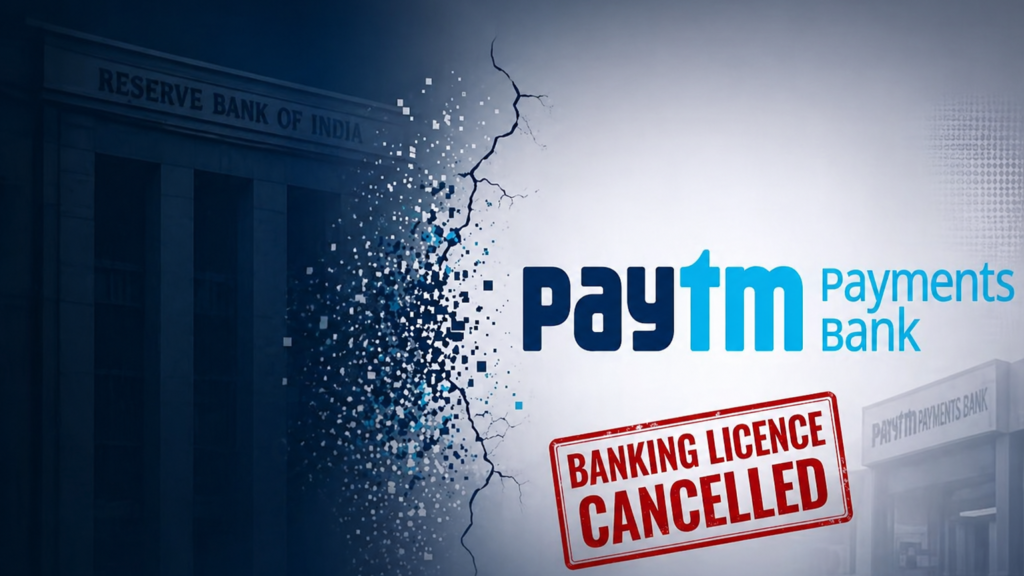
The recent decision by the Reserve Bank of India (RBI) to cancel the licence of Paytm Payments Bank marks a significant moment do display those regulations and compliances are as important as growth in India’s evolving fintech and banking landscape. But to truly understand its implications, we must understand what payments banks are, how they differ from commercial banks, and what led to this drastic regulatory action?
What is a Payments Bank?
Payments banks are a category of banks introduced by RBI in 2015 to promote financial inclusion, on the basis of the recommendation of Nachiket Mor committee in 2014. These banks deal with Small business and low income households.
Key Features of Payments Banks:
- Payment banks can accept deposits up to ₹2 lakh per customer as per RBI.
- Provide savings & current accounts
- Offer ATM/debit cards
- Facilitate digital payments (UPI, wallets, remittances)
- Cannot lend money or issue credit cards
The main feature of such banks are financial inclusion through technology interface. As they cannot lend money, their operations are quite different from a commercial bank. In short, payments banks are like “digital wallets with banking licence”, while commercial banks are full-service financial institutions. Major payment banks in India are:
- Airtel Payment Bank
- India Post Payment Bank
- Fino Payments Bank
- Jio Payments Bank
- NSDL Payment Bank
- Aditya Birla Payment Bank
- Paytm Payments Bank (Licence cancelled)
What Happened with Paytm Payments Bank?
During 2018 RBI scrutinized the transactions carried out by the Paytm Payment Bank and observed major deficiencies, specially in onboarding of customer. Major flaw was onboarding multiple customers on a single PAN. This was a straight Operational Risk failure. Considering the loopholes in the Risk, Compliance and Audit functions (referred to as Assurance Function), in 2022, RBI imposed a bar on onboarding fresh customers. By 2024, RBI imposed restriction on taking new deposits. With a span of 4 years, the bank could not improve its internal control and the fresh business also stopped due to regulatory guidelines, resulting into losses. RBI decided now in 2026 to cancel the banking license and stop the operations.
Timelines:
| 2018 | RBI started scrutiny and found loopholes in customer onboarding |
| 2022 | Bar on new customer onboarding |
| 2024 | Bar on taking fresh deposit |
| 2026 | Cancelling of license |
Significance of the RBI action:
- RBI action gives a strong signal that regulatory non compliances will be dealt with firmly.
- It also gives message to full fledged commercial banks to be careful on internal control and assurance functions.
- This builds a long-term trust in the system and confidence in the regulator.
- It will also increase scrutiny on these banks and public at large may rely more on full commercial banking rather than smaller banks with limited functions.
- Paytm has clarified that Paytm bank is different from Paytm and hence they are equipped to carry on the transactions without any dependency on Paytm bank.
- It is also clarified that Paytm bank will refund the entire dues to its customers hence there is no need to panic.
Conclusion:
The fall of Paytm Payments Bank is a reminder that in banking, trust and compliance are everything. The lesson is for the entire banking industry in India, not to treat their assurance functions (Compliance, Risk and Audit) as secondary to business. As far as Paytm bank depositors are concerned, there should not be any issue with their repayments.
For consumers and investors alike, this episode reinforces a simple truth:
In finance, regulation is not a hurdle—it is the break that allows you to drive sensibly.
India’s central bank cancels Paytm Payments Bank license | Reuters
FREQUENTLY ASKED QUESTIONS
About the author: The author of the Blog, Sayed Azhar Hasan, is a CFA (ICFAI), MBA, PGDIBF (Islamic Banking and Finance), ex banker with 29 years of banking experience and a management educator.
On social media:
LinkedIn : Sayed Azhar Hasan | LinkedIn
You Tube: Sayed Azhar Hasan – YouTube
Disclaimer: The information provided in this blog is for educational and informational purposes only and does not constitute professional financial, legal, or regulatory advice. While efforts have been made to ensure accuracy based on the RBI circulars, readers should consult official Reserve Bank of India (RBI) guidelines and professional advisors before making business or investment decisions. The views expressed are those of the author and do not necessarily reflect the official policy of any banking institution or regulatory body.
Discover more from At Silly Point
Subscribe to get the latest posts sent to your email.