
BLOG 50/2026 DATED 1ST SEPTEMBER 2026
RBI has issued several circulars during the month of August 2026. A few of these relates to FCNR(B) deposit scheme, for which the last date has been advanced to 31st August instead of 30th Sept. These circulars are not covered here. We found one circular on Responsible Business Conduct which is worth mentioning.
Responsible Business conduct – Fourth Amendment
Circular effective from: 1st January 2027
The said circular was issued to define the responsible business conduct in the matters of recovery by Commercial banks. Related guidelines have been already issued and concerned blogs and RBI guidelines can be read for the details. Here we shall cover the important points of the circular.
- A bank shall put in place the code of conduct for recovery agents and provide training to them in this regard.
- A bank shall update the list of recovery agents on its website.
- A bank shall ensure that information about the borrower is disclosed to these agents/employees only to the extent required.
- A bank shall document the time and number of visits by agent/employee to the borrower.
- A bank shall have a dedicated mechanism for recovery related grievances.
Technology-based mechanism:
- A bank shall not deploy any technology-based mechanism to block/control the borrower’s device, except to recover its loan dues arising out of financing such device.
- A bank shall not restrict the essential services viz incoming calls etc.
- A bank shall ensure that borrower has visibility of the restrictions applied to him.
- A bank shall ensure that restrictions are reversed within 1 hour of the realisation of dues. Failing which bank will have to compensate the borrower @ Rs.250/-per hour of delay.
- A bank shall put in place a robust grievance redressal mechanism.
- A bank/agency can-not make use of the personal data of the borrower.
- A bank shall put in place the structure to control the activities of its recovery agencies.
- A bank shall also comply the guidelines issued by relevant authorities including the guidelines issued by Telecom Regulatory Authority of India (TRAI).
Conduct of Bank employees/recovery agents:
- The employee/agent shall discuss the recovery matter only with the borrower/guarantor.
- They shall interact in a civil manner.
- Time for visiting the borrower is restricted between 8 AM to 7 PM.
- Borrower shall be contacted at the place of his choice. If borrower fails to meet at two or more occasions, then he/she can be contacted at the residence/business premises.
- The employee/agent shall avoid meeting at any inappropriate occasion viz death/medical emergency etc.
- The employee/agent shall not engage in any harsh method of recovery. The harsh methods are narrated as under:
- Use of abusive language.
- Use of social media.
- Sending inappropriate massage.
- Making threatening & anonymous calls.
- Intruding upon their privacy or harassing.
- Making false or misleading representation.
Related RBI circular: NT2231ED57C3AA5F1493BA85E48591D755A18.PDF
Related blog at sillypoint.com: RBI CIRCULARS UPDATE JUNE 2026 – At Silly Point
Author’s views:
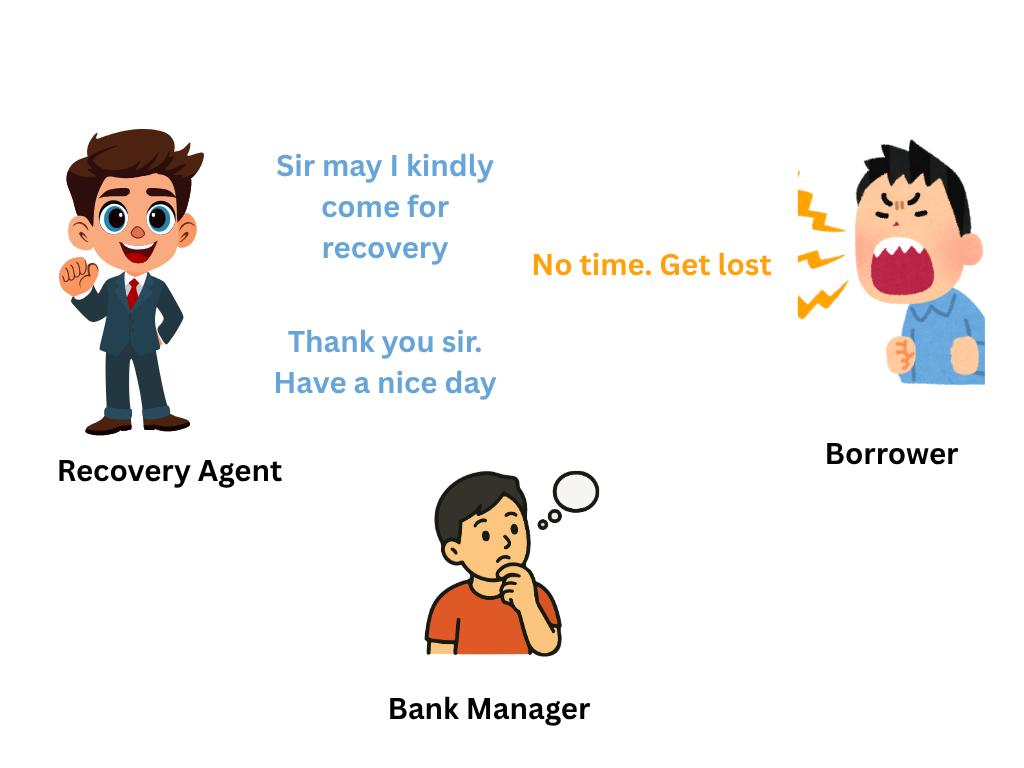
RBI has issued a very decent circular on the responsible business conduct on the aspects of recovery. This is particularly concerning given the complaints regarding the rash and inappropriate behaviour of recovery agents engaged by banks. However, there is other side of story as well, where many borrowers willfully default in making repayment. In these circumstances such guidelines may not act in the best interest of banks. In fact, a balanced guidelines could have been better where RBI could have maintained the borrower’s dignity as well as banker’s impact.
In addition to the above directions of RBI, sillypoint suggest certain additional measures for an effective recovery mechanism while maintaining the responsible business conduct by bank employees/agents.
Adding female recovery agents:
One important aspect that appears to be missing from the guidelines is the need for banks to maintain an adequate pool of trained female recovery agents. More importantly, where the borrower is a woman, banks should, as far as practicable, ensure that recovery-related interactions are handled by female recovery agents. Such a provision would not only make the recovery process more sensitive and dignified but also help address concerns regarding privacy, safety and inappropriate conduct during recovery proceedings.
Increase the timings:
The timings of recovery meeting should be enhanced to ‘7 AM to 10 PM’ from ‘8 AM to 7 PM‘. There are many borrowers who are busy in their offices/works between 8-7 timings and therefore bank employees/recovery agents should have the additional time to contact the borrower.
Classification of willful borrower:
Banks should be encouraged to classify the wilful borrowers, in case he/she remain non-cooperative during recovery process. At present most defaulters remain in non-wilful category. Banks should be encouraged to change this practice. Once a borrower is classified as Wilful, banks should turn to legal route instead of these soft methods.
Common recovery teams of banks:
All banks together should form a common recovery team or a team of recovery agents, so that if the borrower has loans from various banks, a single recovery agent approach him with the entire liability. This will help both banks and borrower as borrower need not deal with multiple recovery agents and bankers will get synergy in recovery process.
District level Bank courts:
RBI should take efforts to convince the government to permit banks, to establish district level bank courts for settling bank and customer disputes. Retired employees of Banks/RBI may be appointed as judges, and they should have some level of judicial powers. The orders should be executed by revenue authorities in a timebound manner. This should be other than Lok Adalats, as these Lok Adalats are only a settlement program without a dispute redressal authority. This will reduce burden from DRT and the recovery process will also be strengthened.
Conclusion:
The circular on responsible business conduct must be followed in both letter and spirit by bankers. However, the regulator must also take into account willful and non‑cooperative borrowers and provide an impactful framework for the banking system. While it is true that NPAs are at a record low, the same cannot be said for SMAs, particularly SMA‑2. The Indian banking system must adopt new and progressive methods of recovery to sustain this achievement without lowering guards.
POLICY RATES (As per MPC meeting ended on 5th August – rates unchanged)
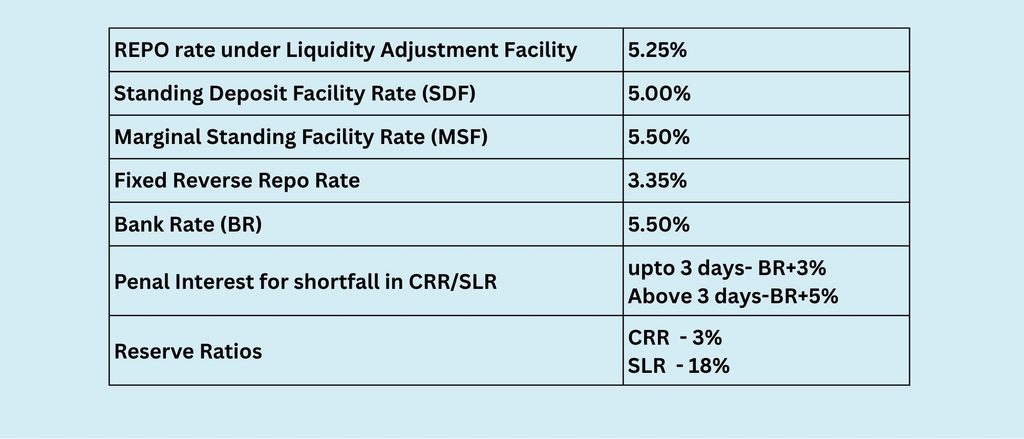
Authors Note: For shortfall in CRR and SLR of 3 days or less a rate of Bank Rate + 3% is charged by RBI while for shortfall of above 3 days a of Bank Rate + 5% is charged.
Frequently asked questions
About the Author
Please refer the about us page @ About us new – At Silly Point
Disclaimer
Please refer the disclaimer page @ Disclaimer new – At Silly Point
Discover more from At Silly Point
Subscribe to get the latest posts sent to your email.